
Tata Tipper Trucks 1918
Tata Tipper Trucks 1918 are one of the most powerful tipper trucks in the country in the 6-tyre category. It has a chassis with a cabin body and boosts of powerful features like:
- Powerful engineer
The engine of Tata Tipper Truck 1918 has an excellent 180 horsepower and offers an economic mileage of between 3.5 kilometres and 4.5 kilometres for every litre of fuel. With a fuel tank capacity of 300 litres, this truck is capable of covering very long distances in a short period of time.
- Payload capacity
Tata Tipper Truck 1918 is capable of carrying payloads of up to 19,500 kilograms. Please note that this is the gross weight value (GWV) of the vehicle and also includes the weight of the vehicle itself. The truck is about 6,500 mm long, 2510 mm wide, and 3010 mm high, offering excellent space for placing the payload.
- Cost-effective
With its excellent mileage and its being a diesel vehicle, the Tata Tipper 1918 is a cost-effective solution.
If these features interest you, contact PRL Construction Equipment, the best supplier of tipper Trucks from leading brands and other logistics solutions like Tata and Ashok Leyland.
Enquiry about Tata Tipper Trucks 1918

Related products

BackHoe Loader
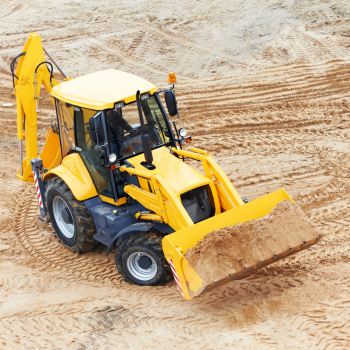
A refurbished backhoe loader is a heavy-duty construction machine that combines the functionality of a loader and a backhoe. It is commonly used in construction, excavation, landscaping, and agricultural projects. The term "refurbished" refers to a machine that has been previously used and then restored to a functional condition, often by replacing worn-out components and performing necessary repairs.Specifications of a typical refurbished backhoe loader may vary depending on the specific model and manufacturer. Here are some common specifications of backhoe excavators , that you might know:<strong>Engine</strong>: It is usually equipped with a diesel engine for high torque and power. The engine size can vary, ranging from around 60 to 120 horsepower (HP) or more.<strong>Loader Capacity</strong>: The loader component of the backhoe tractor has a bucket at the front for loading and carrying materials. The capacity of the loader backhoe bucket typically ranges from 0.8 to 2 cubic yards.<strong>Backhoe Digging Depth</strong>: The backhoe tractor attachment is located at the rear of the machine and is used for digging trenches, excavating, and general earthmoving tasks. The digging depth of the backhoe excavator can vary from 10 to 20 feet or more.<strong>Reach</strong>: The reach of the loader backhoe refers to its horizontal extension capacity. It determines how far the machine can reach while maintaining stability. The reach can vary from 13 to 25 feet or more.<strong>Operating Weight</strong>: The operating weight of a backhoe loader is an important consideration for transportation and stability. It typically ranges from 15,000 to 25,000 pounds, although larger models can weigh significantly more.<strong>Four-Wheel Drive</strong>: Many backhoe loaders are equipped with four-wheel drive for enhanced traction and maneuverability on various terrains.<strong>Controls</strong>: Modern backhoe loaders often feature joystick controls that provide precise operation of the loader and backhoe functions. This allows the operator to control the machine with ease.<strong>Additional Attachments</strong>: Some backhoe loaders can be equipped with additional attachments such as augers, hydraulic hammers, or trenchers, expanding their versatility and capabilities.It’s important to note that specifications can vary among different manufacturers and models. When purchasing a refurbished backhoe loader, it’s advisable to review the specific specifications provided by the seller to ensure it meets your requirements.
Ashok Leyland 2820 10 Tyre
<span style="font-weight: 400;">If you are wondering whether Ashok Leyland 2820 10 tyre is right for you, the following considerations can help you decide:</span> <ul> <li style="font-weight: 400;" aria-level="1"><b>Ashok Leyland 2820 10 tyre </b><span style="font-weight: 400;">is ideal if you are carrying very heavy loads at a time.</span></li> <li style="font-weight: 400;" aria-level="1"><span style="font-weight: 400;">The low mileage means it is not suited for shorter distances or cargo loads. In such cases, you must look for shorter models.</span></li> <li style="font-weight: 400;" aria-level="1"><span style="font-weight: 400;">The powerful engine makes it capable of navigating through even the toughest terrains of the country.</span></li> <li style="font-weight: 400;" aria-level="1"><span style="font-weight: 400;">The price of the </span><b>Ashok Leyland 2820 10 tyre</b><span style="font-weight: 400;"> is another important consideration, and you must ensure it fits within your budget. One round way solution if you are short on funds is going with refurbished models.</span></li> <li style="font-weight: 400;" aria-level="1"><span style="font-weight: 400;">Refurbished Ashok Leyland 2820 can be a more budget-friendly option for you. Further, it is also an eco-friendly option as it can help reduce the carbon footprint of your enterprise. That is because your purchase won't result in a fresh use of new minerals and manufacturing processes.</span></li> <li style="font-weight: 400;" aria-level="1"><span style="font-weight: 400;">You must go for a reputed and trustworthy supplier with several years of experience, especially when it comes to getting refurbished models.</span></li> <li style="font-weight: 400;" aria-level="1"><span style="font-weight: 400;">Check the detailed specifications of the Ashok Leyland 2820 10 tyre to make a better-informed choice</span></li> </ul> <span style="font-weight: 400;">If you are looking for a reliable supplier, PRL Construction Equipment is one of the best and leading suppliers of </span><b>Ashok Leyland 2820 10 Tyre </b><span style="font-weight: 400;">in the country.</span>Dump Truck
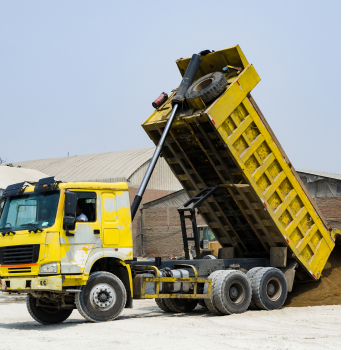
A dump truck, also known as a dumper or heavy-duty truck designed for transporting and unloading bulk materials. It is commonly used in construction, mining, and other industries where large quantities of loose materials need to be transported efficiently. Here is a description of a typical dump truck:<strong>Body and Chassis:</strong>The dump truck consists of a specially designed body and a robust chassis. The body is typically made of steel and is mounted onto the chassis.The body is specifically built to accommodate bulk materials and has high sides and a rear tailgate that can be opened to discharge the load.<strong>Dumping Mechanism:</strong>The distinctive feature of a dump truck is its ability to tilt the body to unload the materials. This is achieved through a hydraulic or pneumatic system.The body can be raised at the front or on one side, allowing the materials to slide out or be deposited at the desired location.<strong>Power and Propulsion:</strong>Dump trucks are powered by diesel engines, providing the necessary torque and power to haul heavy loads.The engine is connected to a transmission system that transfers power to the wheels, typically through a driveline and axle configuration.<strong>Size and Capacity:</strong>Dump trucks come in various sizes, ranging from small to extremely large models, each with different load-carrying capacities.Smaller dump trucks, often referred to as "pickup trucks," have lower load capacities and are commonly used for smaller-scale projects.Larger dump trucks can have a capacity ranging from several tons to over 400 tons, depending on the model and intended application.<strong>Controls and Operation</strong>:Dump trucks are operated by skilled drivers who control the vehicle from the driver's cab.The driver's cab is typically located above the engine compartment, providing good visibility of the surrounding area.Controls include steering, accelerator, brake, transmission, and a control mechanism for the dumping mechanism.<strong>Safety Features:</strong>Dump trucks are equipped with safety features to protect the driver and other personnel on the worksite.These features may include seat belts, roll-over protection systems (ROPS), and warning alarms to alert nearby workers during the dumping process. <ol> <li><strong>Types and Configurations:</strong></li> </ol> Dump trucks can come in various configurations, including standard dump trucks with a fixed bed and rear dump, as well as articulated dump trucks (ADTs) with a pivoting joint between the cab and the dump body, allowing for enhanced maneuverability. <ol> <li><strong>Maintenance and Service:</strong></li> </ol> Regular maintenance and inspections are crucial to ensure the proper functioning and longevity of a dump truck.This includes routine checks of the engine, tires, hydraulic systems, and other components to identify and address any issues promptly.Excavator
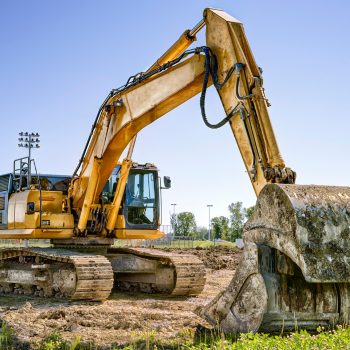
A refurbished excavator is a heavy construction machine used for digging and earthmoving tasks. It consists of a boom, stick, and bucket that are controlled by hydraulic systems. A refurbished excavator has been previously used and has undergone refurbishment to restore its functionality and performance.Here are some common descriptions and specifications you might find for a refurbished excavator:<strong>Size Classes</strong>: Excavators are available in different size classes, categorized by their operating weight. Common classes include mini excavators (under 6 metric tons), compact excavators (6-10 metric tons), and standard excavators (10-45+ metric tons).<strong>Operating Weight</strong>: The operating weight of an excavator depends on its size class. For example, a mini excavator may weigh around 1 to 6 metric tons, while a standard excavator can range from 10 to 45+ metric tons or more.<strong>Engine Power</strong>: Excavators are typically powered by diesel engines. The engine power varies depending on the size of the excavator, ranging from around 15 to 300+ horsepower (HP) or more.<strong>Digging Depth</strong>: The digging depth indicates how deep the excavator can reach. It varies depending on the model and can range from 6 to 60+ feet or more.<strong>Reach:</strong> The reach of an excavator refers to its horizontal extension capacity. It determines how far the excavator's boom can reach while maintaining stability. The reach can vary from 10 to 80+ feet or more.<strong>Bucket Capacity</strong>: Excavators have different bucket sizes to accommodate various tasks. The bucket capacity typically ranges from 0.1 to 2+ cubic yards or more, depending on the model.<strong>Operating Controls</strong>: Excavators are operated using hydraulic controls, allowing precise movement of the boom, stick, and bucket. Some excavators may have additional features like joystick controls for increased operator comfort and control.<strong>Track or Wheel Configuration:</strong> Excavators are available in both tracked and wheeled configurations. Tracked excavators provide better traction and stability on uneven terrain, while wheeled excavators offer enhanced mobility on flat surfaces.<strong>Additional Features:</strong> Excavators may come with additional features such as hydraulic quick couplers for easy attachment changes, auxiliary hydraulic circuits for operating various attachments, and advanced technology systems for improved efficiency and productivity. <p style="text-align: justify;">.</p> <iframe title="YouTube video player" src="https://www.youtube.com/embed/Wn15-4Crz8k" width="600" height="337" frameborder="0" allowfullscreen="allowfullscreen"></iframe>Footer
About Company

PRL Construction Equipment – Expertise in Rebuilding Refurbished Construction Equipment